Helping People Discover Their Best Options Through...

The Rebe Homes Team helps our clients by providing...

Information with clear interpretation,
Judgment rooted in experience,
Insight that protects,
Conscious guidance based on integrity,
Meaning behind every decision,
Inspiration that encourages,
Relationships with service.

Thursday, June 18, 2015

Mortgage Rates Just Jumped Over 4%. Now What?

Mortgage Rates Just Jumped Over 4%. Now What? | Keeping Current Matters

Last week, mortgage interest rates jumped over the 4% mark for the first time this year according to Freddie Mac’s Mortgage Market Survey.

In an article in Housing Wire, a Bankrate analyst explained:

“Mortgage rates rocketed higher following a stronger than expected monthly employment report. The good news on the job front further solidifies the notion that the Federal Reserve will likely begin raising interest rates soon, perhaps in the third quarter of this year.”

This is the same type of commentary we heard back in the spring of 2013 when the talk of the Fed possibly raising rates caused mortgage interest rates to surge by a full percentage point from the end of April through the end of June of that year.

Will We See that Same Surge in 2015?

No one knows for sure. However, Fannie Mae, Freddie Mac, the Mortgage Bankers Association and the National Association of Realtors are each calling for rates to continue their upswing over the next six quarters.

Here is a chart comparing 2013 to this year:
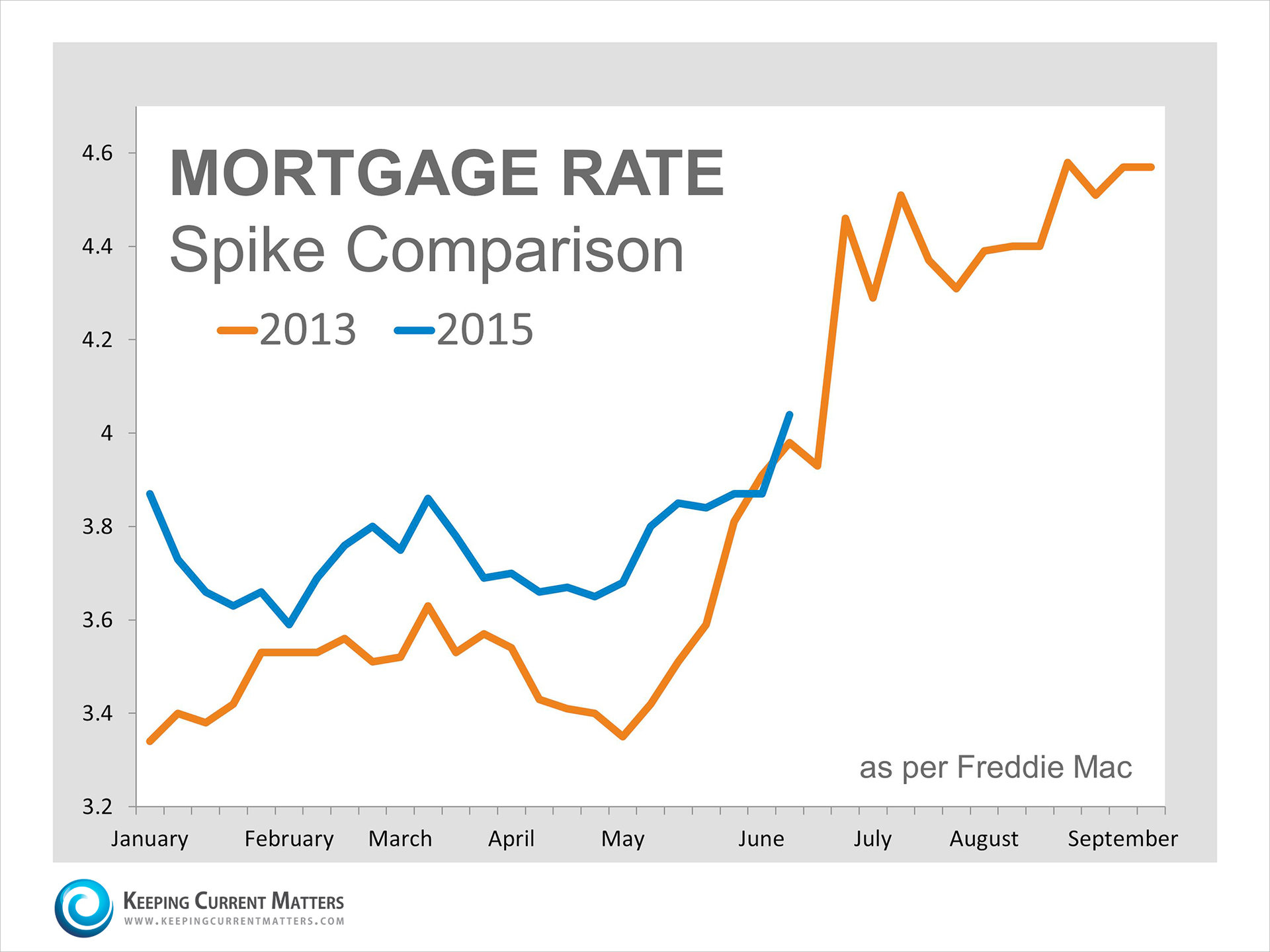
Mortgage Rate Spike Comparison | Keeping Current Matters

Bottom Line


Though no one can definitely say where rates will be six months from now, most experts believe they will be higher. If you are thinking of buying your first home or are considering a move up to the house of your family’s dreams, now may be the best time to do it.

Tuesday, June 16, 2015

217,726 Reasons to Buy a Home Now!

217,726 Reasons to Buy a Home Now! | Keeping Current Matters

The inaugural Opportunity Cost Report was released recently by realtor.com. The report explained that “with interest rates and home prices expected to climb in the next year, the financial penalties of delaying or forgoing a home purchase in today's market have become very steep”.

The report estimates that, based on today's dollars, the average purchaser would accumulate $217,726 in increased wealth over a 30-year period.

(You can get the projected wealth increase for almost 100 metros here.)

What could this mean to someone sitting on the fence waiting to buy?

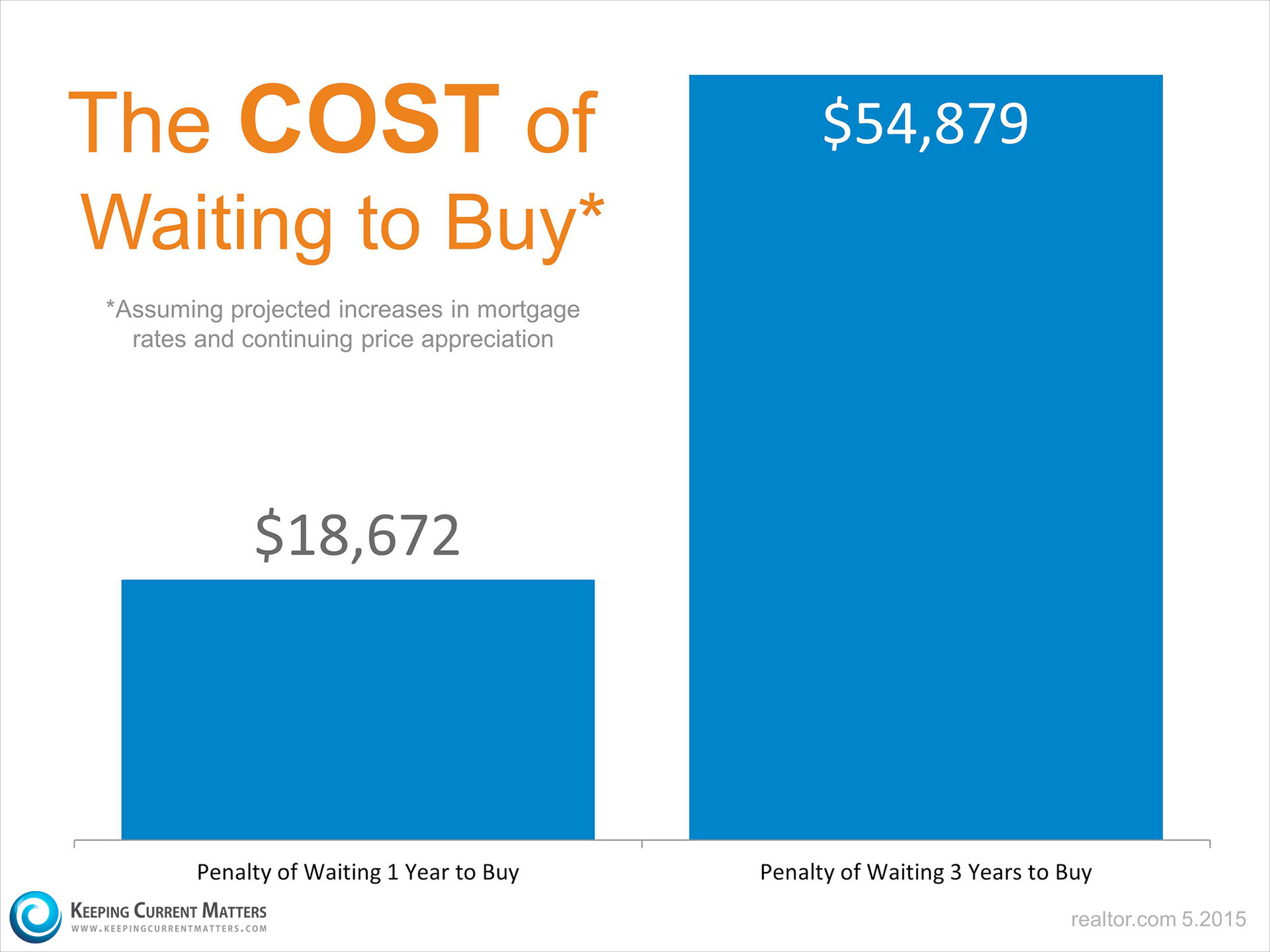
Experts believe that both home prices and mortgage interest rates will increase over the next twelve months. Obviously, if this does happen, the monthly cost of a home a year from now will be dramatically higher than it is today. The Opportunity Cost Reportbreaks down exactly how much a purchaser could lose over increments of one year and three years. Here are the results based on an average purchaser in the U.S. delaying their purchase:

The Cost of Waiting to Buy | Keeping Current Matters

Bottom Line


If you are ready, willing and able to buy a home, waiting doesn't make sense.

Tuesday, June 9, 2015

2 Out of 3 Renters Want to Own. What’s Stopping Them?

2 Out of 3 Renters Want to Own. What’s Stopping Them? | Keeping Current Matters

The Federal Reserve Bank of New York recently released the 2015 SCE Housing Survey. The survey revealed that most current renters would prefer owning and that 61.9% of them plan to buy a home within the next five years.

68.3% stated they would prefer owning (with 45.6% saying they ‘strongly’ prefer owning). When asked at what point in the future do they think they will own a primary residence:
  • 8.2% said within a year
  • 15.3% said in 1 to 2 years
  • 38.4% said between 3 to 5 years
What’s Holding Them Back?

Of the 68.3% who would prefer to own, 2 out of 3 cited difficulty in getting a mortgage for the reason they do not own. However, many believe that the reason so many think that it would be difficult to get a mortgage is not fully based on current market realities.

For example, studies have shown that there is confusion over the amount of money needed for a down payment. Research has shown that 40 to 50% of Americans believe that between 15-20% is the minimum required for a down payment. In reality, there are many programs available at 5% and even 3%. There are even some programs that don’t require any down payment (ex. VA loans).

Others fear they need a perfect credit score or believe that the overall mortgaging process has become almost impossible. Actually, the Mortgage Credit Availability Index, a report from the Mortgage Bankers Association, has shown that, over the last seven months, access to mortgages has gotten much more available.

And the NY Fed study suggests that some renters are waiting for interest mortgage rates to fall even further. Fifty percent of the renters surveyed believe mortgage interest rates will fall over the next year and almost 10% believe that they will fall by more than 1%. However, the reality of the situation is that Freddie Mac, the Mortgage Bankers Association and the National Association of Realtors are all projecting that rates will be significantly higher at this time next year. They are all predicting mortgage rates will be almost 1% higher!

Bottom Line


Many renters want to own their own home. Some are not moving forward based on misunderstandings regarding the mortgage process. If you are currently a renter who desires the benefits of homeownership, sit down with a local real estate professional to determine what your options actually are.

Thursday, June 4, 2015

The #1 Reason to Buy Right Now – THE MONEY!!

The #1 Reason to Buy Right Now – THE MONEY!! | Keeping Current Matters

People often ask whether they should buy a home now or wait. Recently released data suggests that waiting may not make sense as prices seem to again be on the rise. Let’s take a look at some of the data and commentary on the subject:


“The current tightness of supply conditions would normally be consistent with much faster price growth. The continued steady growth in home sales that we expect this year will only add to this upward pressure on prices.”


“The S&P/Case-Shiller U.S. National Home Price Index, covering all nine U.S. census divisions, recorded a 4.1% annual gain in March 2015 … with a 0.8% increase for the month.”


“All signs are pointing toward continued price appreciation throughout 2015… Tight inventories, job growth and the impact of demographics and household formation are pushing price levels in many states toward record levels.”


“Even without further acceleration, the pace of price growth remains too high. Strong buyer demand and low inventories coupled with relatively low new construction are helping to push prices up, keeping the housing market tipped in favor of sellers.”


"The first quarter saw strong and widespread home price growth throughout most of the country. Home prices are now, on average, roughly 20 percent above where they were three years ago. This run-up has been historically exceptional and is particularly notable in light of the limited household income growth and modest rate of overall inflation observed during that same time period."

Bottom Line


If you are planning on buying a home in the near future, waiting probably doesn’t make sense from a purely pricing standpoint.

Wednesday, June 3, 2015

Guess Where Residential Rents are Heading?

Guess Where Residential Rents are Heading? | Keeping Current Matters

Each month, many people are faced with the decision of renewing their rental lease for another year or purchasing their first home. One of the questions that must be answered before they make a decision is – “Where are rents headed?”

The Wall Street Journal recently wrote an article on this issue. Their conclusion:

“Apartment rental increases slowed in the first quarter from a year earlier, but the move is more likely a temporary blip than the beginning of a long-term respite for renters.”

The article goes on to quote Ryan Severino, a senior economist at Reis:

“I wish I had a better story to tell renters these days, but I think they’re in for some rent increases for the foreseeable future.”

Probably the most interesting part of the article came in the Comment Section where a proud landlord proclaimed:

“As a landlord I can tell you I don't pay property tax. I don't pay for repairs. The tenant pays. I get my money off the top.”


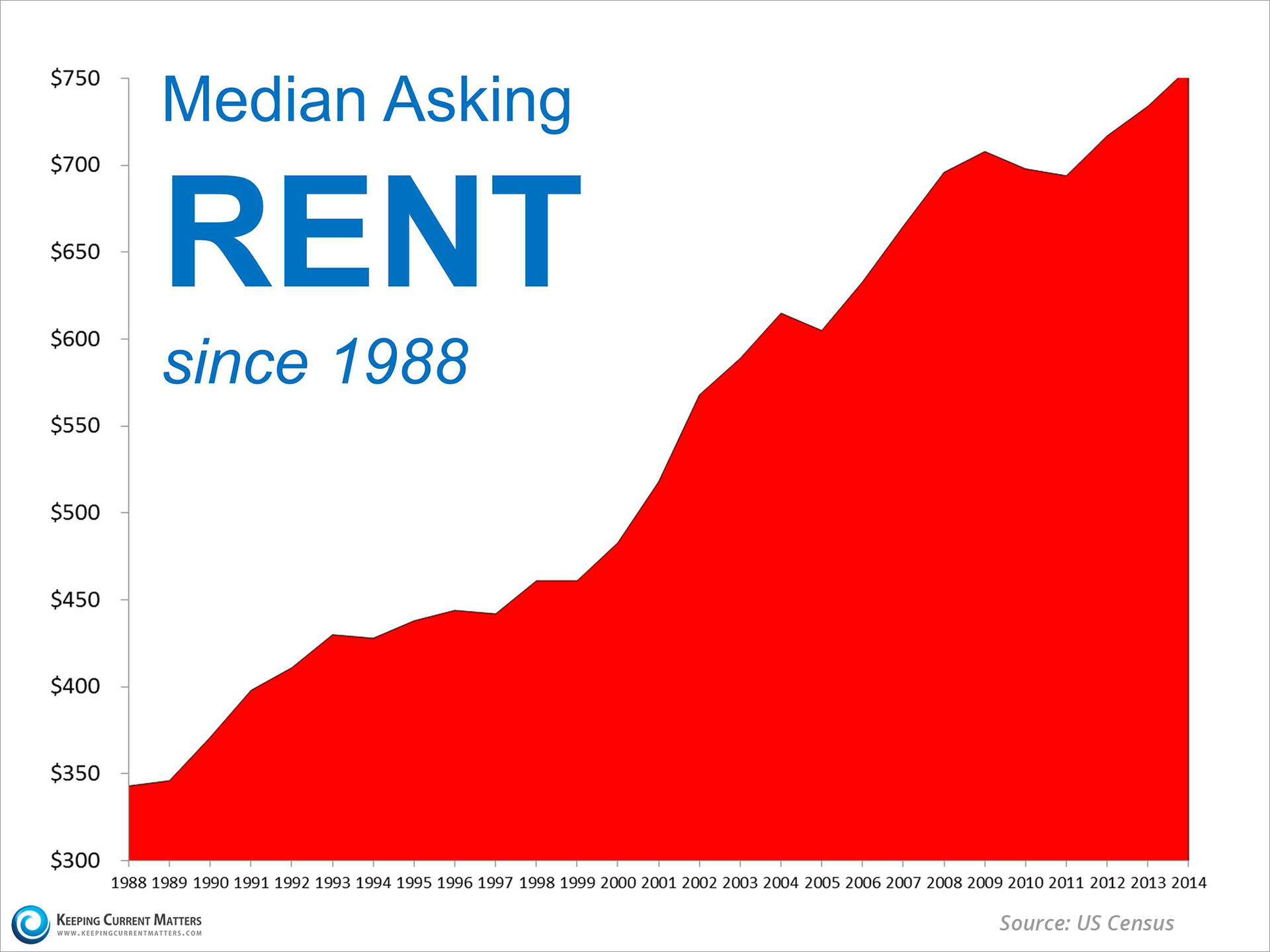
Here is a chart showing rent increases over the last 25+ years:

Median Asking Rent Since 1988 | Keeping Current Matters

Tuesday, June 2, 2015

5 Reasons You Shouldn’t For Sale By Owner


5 Reasons You Shouldn't For Sale By Owner | Keeping Current Matters

In today's market, with homes selling quickly and prices rising some homeowners might consider trying to sell their home on their own, known in the industry as a For Sale by Owner (FSBO). There are several reasons this might not be a good idea for the vast majority of sellers.

Here are five reasons:

1. There Are Too Many People to Negotiate With

Here is a list of some of the people with whom you must be prepared to negotiate if you decide to For Sale By Owner:
  • The buyer who wants the best deal possible
  • The buyer’s agent who solely represents the best interest of the buyer
  • The buyer’s attorney (in some parts of the country)
  • The home inspection companies which work for the buyer and will almost always find some problems with the house.
  • The appraiser if there is a question of value
2. Exposure to Prospective Purchasers

Recent studies have shown that 88% of buyers search online for a home. That is in comparison to only 21% looking at print newspaper ads. Most real estate agents have an internet strategy to promote the sale of your home. Do you?

3. Results Come from the Internet

Where do buyers find the home they actually purchased?
  • 43% on the internet
  • 9% from a yard sign
  • 1% from newspaper
The days of selling your house by just putting up a sign and putting it in the paper are long gone. Having a strong internet strategy is crucial.

4. FSBOing has Become More and More Difficult

The paperwork involved in selling and buying a home has increased dramatically as industry disclosures and regulations have become mandatory. This is one of the reasons that the percentage of people FSBOing has dropped from 19% to 9% over the last 20+ years.

5. You Net More Money when Using an Agent

Many homeowners believe that they will save the real estate commission by selling on their own. Realize that the main reason buyers look at FSBOs is because they also believe they can save the real estate agent’s commission. The seller and buyer can’t both save the commission.

Studies have shown that the typical house sold by the homeowner sells for $208,000 while the typical house sold by an agent sells for $235,000. This doesn’t mean that an agent can get $27,000 more for your home as studies have shown that people are more likely to FSBO in markets with lower price points. However, it does show that selling on your own might not make sense.

Bottom Line


Before you decide to take on the challenges of selling your house on your own, sit with a real estate professional in your marketplace and see what they have to offer.

Monday, June 1, 2015

Today Kicks Off National Homeownership Month!

Today Kicks Off National Homeownership Month! | Keeping Current Matters

National Homeownership Month actually started as a week-long celebration of homeownership during the Clinton administration in 1995. In 2002, President George W. Bush proclaimed June as the National Homeownership Month. Here is an excerpt from his proclamation:

“Homeownership is an important part of the American Dream…A home provides shelter and a safe place where families can prosper and children can thrive. For many Americans, their home is an important financial investment, and it can be a source of great personal pride and an important part of community stability.”

“Homeownership encourages personal responsibility and the values necessary for strong families. Where homeownership flourishes, neighborhoods are more stable, residents are more civic-minded, schools are better, and crime rates decline.”

“During National Homeownership Month, I encourage all Americans to learn more about financial management and to explore homeownership opportunities in their communities. By taking this important step, individuals and families help safeguard their financial futures and contribute to the strength of our Nation.”


If you are one of the many renters out there who would like to make the transition from renter to homeowner, contact a local real estate professional who can help evaluate your ability to do so.