Helping People Discover Their Best Options Through...

The Rebe Homes Team helps our clients by providing...

Information with clear interpretation,
Judgment rooted in experience,
Insight that protects,
Conscious guidance based on integrity,
Meaning behind every decision,
Inspiration that encourages,
Relationships with service.

Wednesday, December 2, 2015

The Residential Rental Market Heading into 2016

The Residential Rental Market Heading into 2016 | Keeping Current Matters

Below are quotes from experts as well as industry reports & articles that cover the residential rental market in the U.S.

The experts…


"Make no mistake: Despite this recent slowdown in rental appreciation, the rental affordability crisis we've been enduring for the past few years shows no signs of easing, especially as income growth remains weak. It will take a lot more supply, and a lot more renters-turned-homeowners, to fully reverse this.”


“Rents and home prices are expected to exceed income growth into next year because of the insufficient creation of new home construction and the detrimental impact its inadequacy continues to have on housing costs in several markets.”


"We know rents are rising faster than incomes, and now we have data to show that many renters don't have enough to pay all their debts each month, which is forcing them to make tradeoffs, such as cutting spending on other items.”

The reports and articles…


“Rising rents won't let up in 2016, and will continue to set new records. The next year will bring the least affordable median rents ever.”


“68% of property managers predict that rental rates will continue to rise in the next year by an average of 8%”


“The primary reasons cited for the latest rises were increasing demand and low inventory. Vacancy rates for rental housing nationally dropped to a 20-year low of 6.8 percent in the second quarter…Rents and occupancies are currently hovering at historic highs as supply isn't keeping up with demand.”

 Bottom Line


If you are one of the many renters debating a home purchase, meet with a real estate professional in your area who can show you your options, before your rent goes up!

The Impact of Higher Interest Rates

The Impact of Higher Interest Rates | Keeping Current Matters

Last week, an article in the Washington Post discussed a new ‘threat’ homebuyers will soon be facing: higher mortgage rates. The article revealed:

“The Mortgage Bankers Association expects that rates on 30-year loans could reach 4.8 percent by the end of next year, topping 5 percent in 2017. Rates haven’t been that high since the recession.”

How can this impact the housing market?

The article reported that recent analysis from Realtor.com found that -

“…as many as 7% of people who applied for a mortgage during the first half of the year would have had trouble qualifying if rates rose by half a percentage point.”

This doesn’t necessarily mean that those buyers negatively impacted by a rate increase would not purchase a home. However, it would mean that they would either need to come up with substantially more cash for a down payment or settle for a lesser priced home.

Below is a table showing how a jump in mortgage interest rates would impact the purchasing power of a prospective buyer on a $300,000 home.

Buyers Purchasing Power | Keeping Current Matters

Bottom Line


If you are considering a home purchase (either as a first time buyer or move-up buyer), purchasing sooner rather than later may make more sense from a pure financial outlook.

Rent vs. Buy: Either Way You’re Paying A Mortgage

Rent vs. Buy: Either Way You're Paying A Mortgage | Keeping Current Matters

There are some people that have not purchased a home because they are uncomfortable taking on the obligation of a mortgage. Everyone should realize that, unless you are living with your parents rent free, you are paying a mortgage - either your mortgage or your landlord’s.

As The Joint Center for Housing Studies at Harvard University explains:

“Households must consume housing whether they own or rent. Not even accounting for more favorable tax treatment of owning, homeowners pay debt service to pay down their own principal while households that rent pay down the principal of a landlord plus a rate of return.  

That’s yet another reason owning often does—as Americans intuit—end up making more financial sense than renting.”

Christina Boyle, a Senior Vice President, Head of Single-Family Sales & Relationship Management at Freddie Mac, explains another benefit of securing a mortgage vs. paying rent:

“With a 30-year fixed rate mortgage, you’ll have the certainty & stability of knowing what your mortgage payment will be for the next 30 years – unlike rents which will continue to rise over the next three decades.”

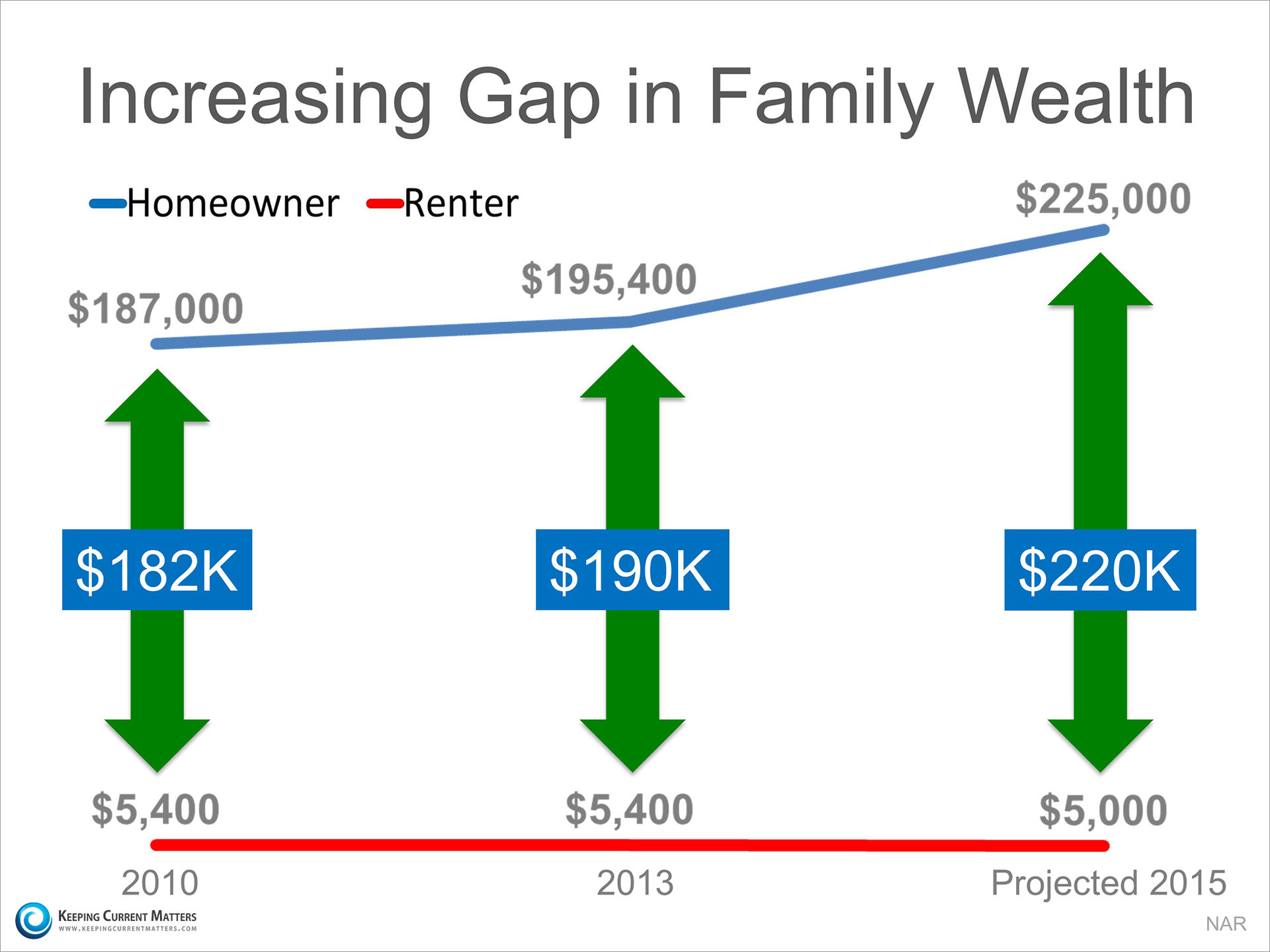
As an owner, your mortgage payment is a form of ‘forced savings’ that allows you to have equity in your home that you can tap into later in life. As a renter, you guarantee your landlord is the person with that equity.

The graph below shows the widening gap in net worth between a homeowner and a renter:

Increasing Gap in Family Wealth | Keeping Current Matters

Bottom Line


Whether you are looking for a primary residence for the first time or are considering a vacation home on the shore, owning might make more sense than renting with home values and interest rates projected to climb.
Existing Home Sales Up 3.9% [INFOGRAPHIC] | Keeping Current Matters

Distressed Property Sales Hit New Low

Distressed Property Sales Hit New Low | Keeping Current Matters

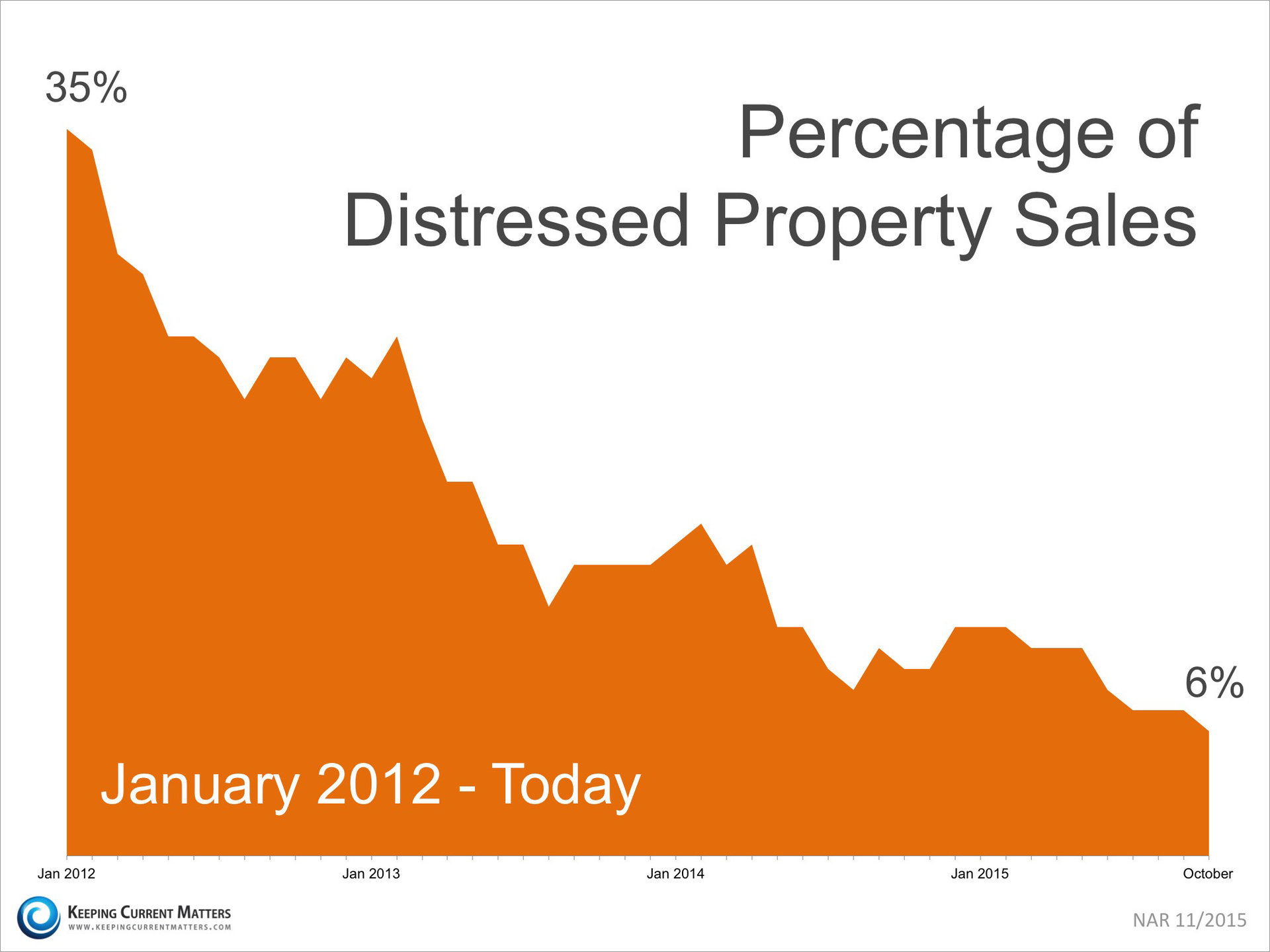
The National Association of Realtors (NAR) just released their Existing Home Sales Report revealing that distressed property sales accounted for 6% of sales in October. This is down from 9% in 2014 and the lowest figure since NAR began tracking distressed sales in October 2008.

Below is a graph that shows just how far the market has come since January 2012 when distressed sales accounted for 35% of all sales.

Percentage of Distressed Property Sales | Keeping Current Matters

Existing Home Sales Up Year-Over-Year

Mortgage interest rates remained below 4% in October prompting existing home sales to stay at a healthy annual pace of 5.36 million. Year-over-year sales were up 3.9%.

Inventory of homes for sale remain below the 6-month supply that is necessary for a normal market, as they fell 2.3% to a 4.8-months supply. The shortage in inventory has contributed to the median home price rising an additional 5.8% to $219,600.

NAR’s Chief Economist, Lawrence Yun had this to say about the lack of inventory:

"New and existing-home supply has struggled to improve so far this Fall, leading to few choices for buyers and no easement of the ongoing affordability concerns still prevalent in some markets."

There is good news though, as Yun went on to say:

"As long as solid job creation continues, a gradual easing of credit standards even with moderately higher mortgage rates should support steady demand and sales continuing to rise above a year ago."

Bottom Line


If you are debating putting your home on the market this year, now may be the time. Buyers are still out there looking for their dream home. Meet with a local Rebe Homes real estate professional who can help you determine your best plan.

Millennials: What FICO Score is Needed to Buy a Home?

Millennials: What FICO Score is Needed to Buy a Home? | Keeping Current Matters

In a recent article by the Wharton School of Business at the University of Pennsylvania, it was revealed that some Millennials are not looking to purchase a home simply because they don’t believe they can qualify for a mortgage.

The article quoted Jessica Lautz, the National Association of Realtors’ Managing Director of Survey Research, as saying that there is a significant population that does not think they will be approved for a mortgage and doesn’t even try. The article also quoted Fannie Mae CEO Tim Mayopoulos :

“I do think that there’s a sense out there in the marketplace among borrowers that credit may not be available, especially for people with lower credit scores.”

So what credit score is necessary?

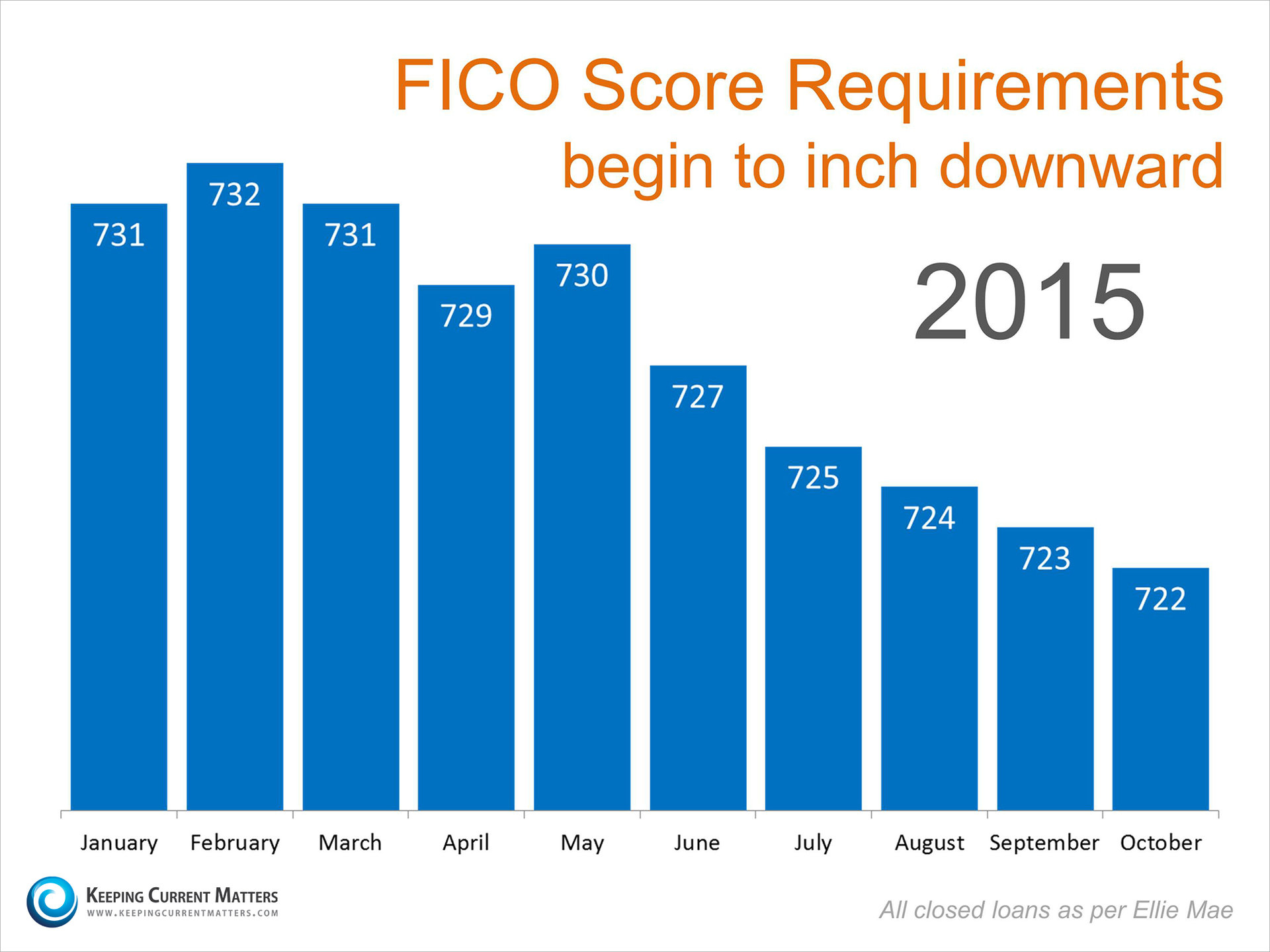
A recent survey reported that two-thirds of the respondents believe they need a very good credit score to buy a home, with 45 percent thinking a “good credit score” is over 780.

In actuality, the FICO score on closed loans (as reported by Ellie Mae) is much lower and has been dropping over the last several months.

FICO Score Requirements | Keeping Current Matters

Bottom Line


Millennials who are considering a home purchase should get advice from a local real estate or mortgage professional now. They may be surprised how much the requirements for a mortgage have eased.

Equity Matters A LOT… Just Ask Freddie Mac

Equity Matters A Lot... Just Ask Freddie Mac | Keeping Current Matters

There are many reasons, both financial and non-financial, that homeownership remains an important part of the American Dream. One of the biggest reasons is the fact that it helps build family wealth. Recently, Freddie Mac wrote about the power of home equity. They explained:

“In the simplest terms, equity is the difference between how much your home is worth and how much you owe on your mortgage. You build equity by paying down your mortgage over time and through your home's appreciation. In a nutshell, your money is working for you and contributing toward your financial future.”

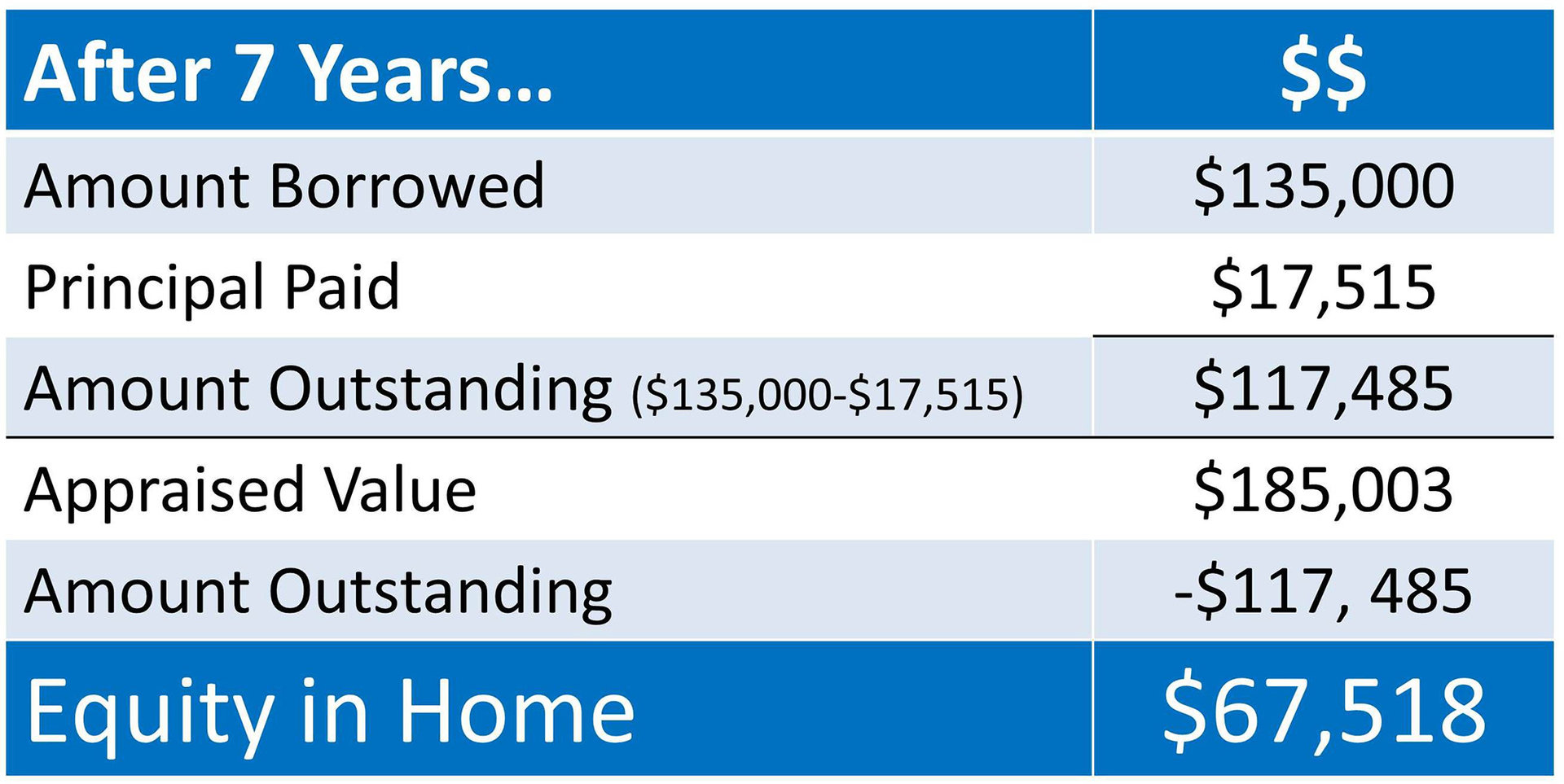
They went on to show an example where a person bought a home for $150,000 with a down payment of 10% ($15K), resulting in a loan amount of $135,000. The buyer secured a 30-year fixed-rate mortgage at 4.5% with a monthly mortgage payment of $684.03 (not including taxes and insurance).

The chart below demonstrates the home equity built after 7 years of making mortgage payments and assuming the historic national average of 3% per year home appreciation:

Home Equity Earned | Keeping Current Matters

And that number continues to build as you continue to own the home.

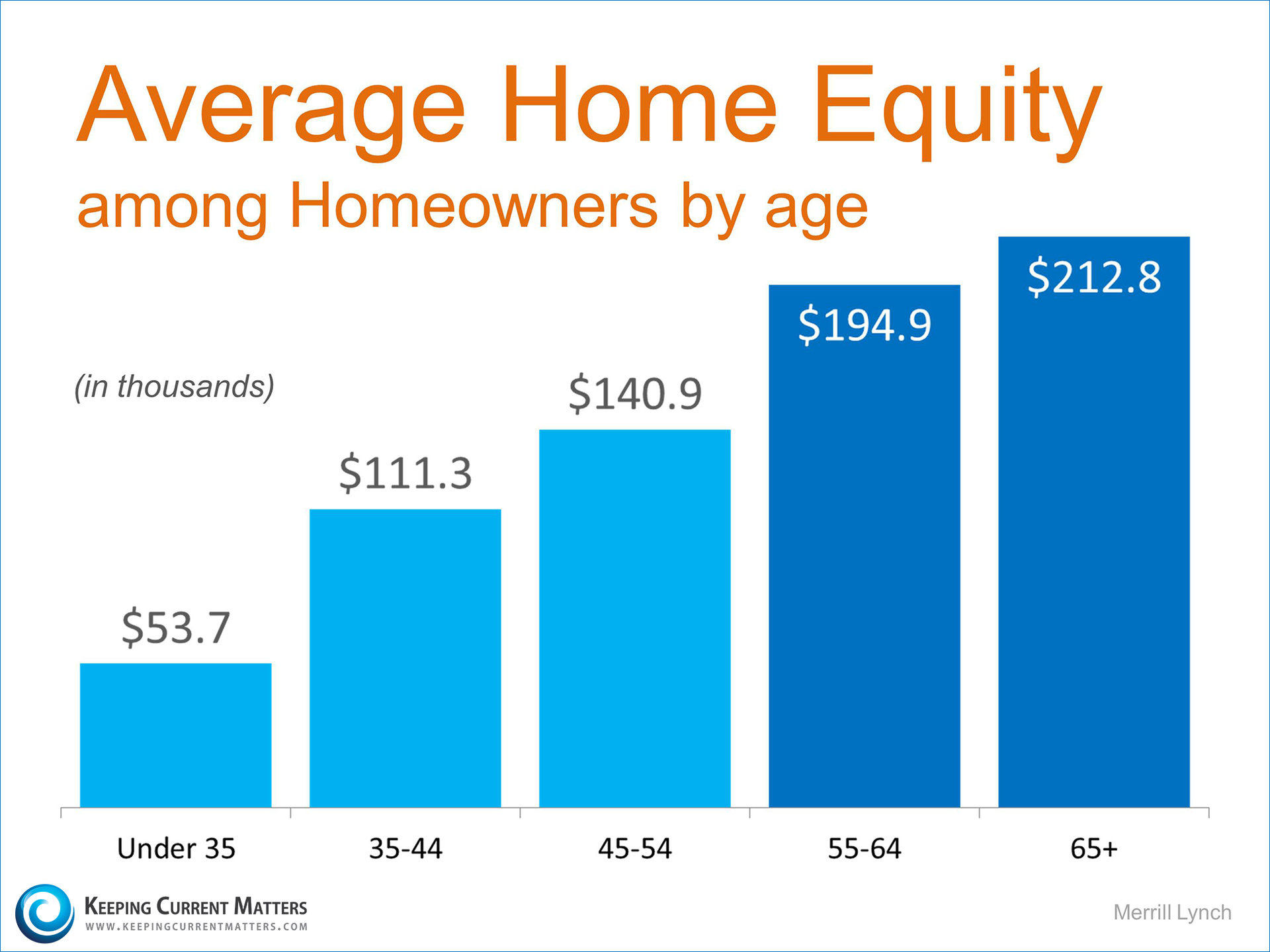
Merrill Lynch published a report earlier this year that showed the average equity homeowners have acquired by certain ages.

Average Home Equity | Keeping Current Matters

Bottom Line

Home equity is important to building wealth as a family. Referring to the first scenario above, Freddie Mac explained:

“Now, if you continued to rent, and made the same payment of $684.03 per month, you'd have zero equity and no means to build it. Building equity is a critical part of homeownership and can help you create financial stability.”


Put your housing cost to work for you and your family. Meet with a real estate professional today to explore your options.